Bluebirds in Winter: Nature's Survival Story
Bluebirds in Winter: Nature's Survival Story
The first time we saw bluebirds at our home, they were drinking from a puddle on the street. It was December, and everything about the scene felt wrong. Why were these birds here in the dead of winter instead of during breeding season?
The Winter Mystery
When we first moved to our neighborhood, a beloved neighbor mentioned something that didn't make sense: "We have bluebirds here, especially in December and January." For someone who'd grown up in suburban Massachusetts without ever seeing a bluebird, this seemed completely backwards. Weren't birds supposed to be here in summer and gone in winter?
The answer reveals one of nature's most elegant adaptations.
From Bugs to Berries: A Dietary Revolution
Eastern bluebirds are insectivores for most of the year. Their fine, narrow beaks are perfectly designed for plucking caterpillars, beetles, and grubs from the ground. Watch a bluebird during breeding season and you'll see them perched on low branches, scanning the grass before dropping down to snatch their prey.
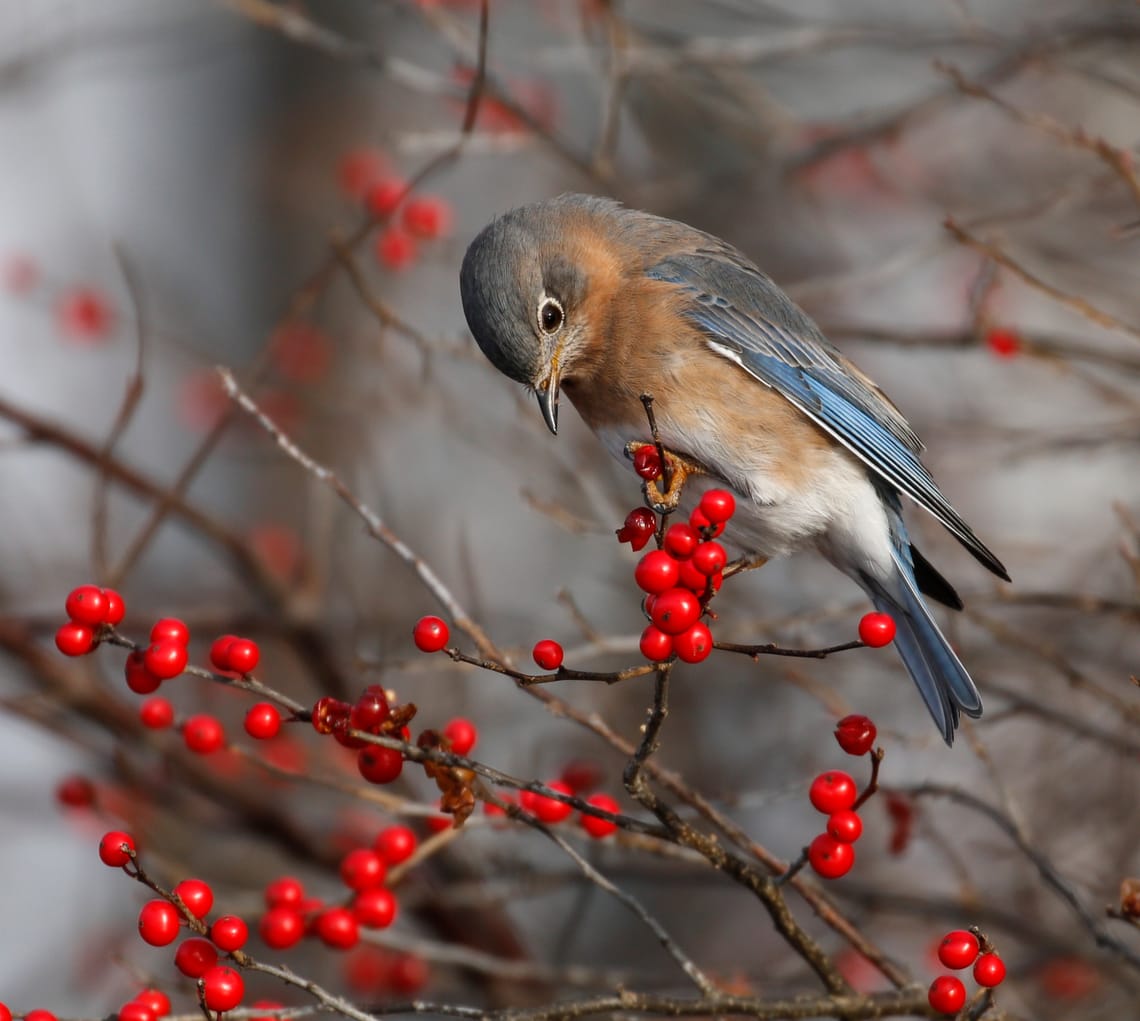
But here's what makes them remarkable: when winter arrives and insects disappear, bluebirds completely transform their diet. They become berry specialists.
This isn't a minor adjustment - it's a complete dietary revolution. The same birds that spent all summer eating exclusively protein switch to an all-fruit diet when temperatures drop. Many of Massachusetts's bluebirds don't migrate at all. They simply change their menu.
The Invasive Plant Paradox
Here's where the story gets complicated. The berries sustaining our local bluebirds through winter largely come from multiflora rose - an invasive plant that conservationists typically want to eradicate.
This non-native rose, with its small white flowers in summer, produces clusters of red berries that mature just as winter sets in. These berries have become so crucial to bluebird survival that removing them could actually harm the very native species we're trying to protect.
It's not just bluebirds benefiting either. Northern mockingbirds, Carolina wrens, and cedar waxwings all depend on these invasive berries to survive New England winters. Conservation, it turns out, isn't always black and white.
The Winter Wanderers
During breeding season, bluebirds are fiercely territorial, staying close to their chosen field and nest site. But winter changes everything. Without chicks to feed or territory to defend, they become nomadic.
They develop routes between known food sources, moving from one berry patch to another as different fruits ripen throughout the winter. One day they're feeding on multiflora rose, the next on sumac, then onto winterberry or crabapples. This is why we see them in December near houses and streets - they're following the food, not the habitat.
That's why our neighbor only saw them in winter. The bluebirds were always around, just hidden away in distant fields during breeding season. Come winter, their search for berries brought them into suburbia.
A Deeper Connection
Understanding this seasonal transformation changed how we see these birds. That December sighting of bluebirds at a street puddle wasn't an anomaly - it was part of an ancient survival strategy.
Now when we see a bluebird perched among red berries on a cold January morning, we're witnessing something remarkable: a species that refused to retreat south, instead evolving to thrive in two completely different versions of the same place.
Watch our complete Eastern Bluebird documentary, including footage of our 16-box conservation program and the dramatic battle between bluebirds and house sparrows for nesting sites.