The Green Heron: Master of Patience
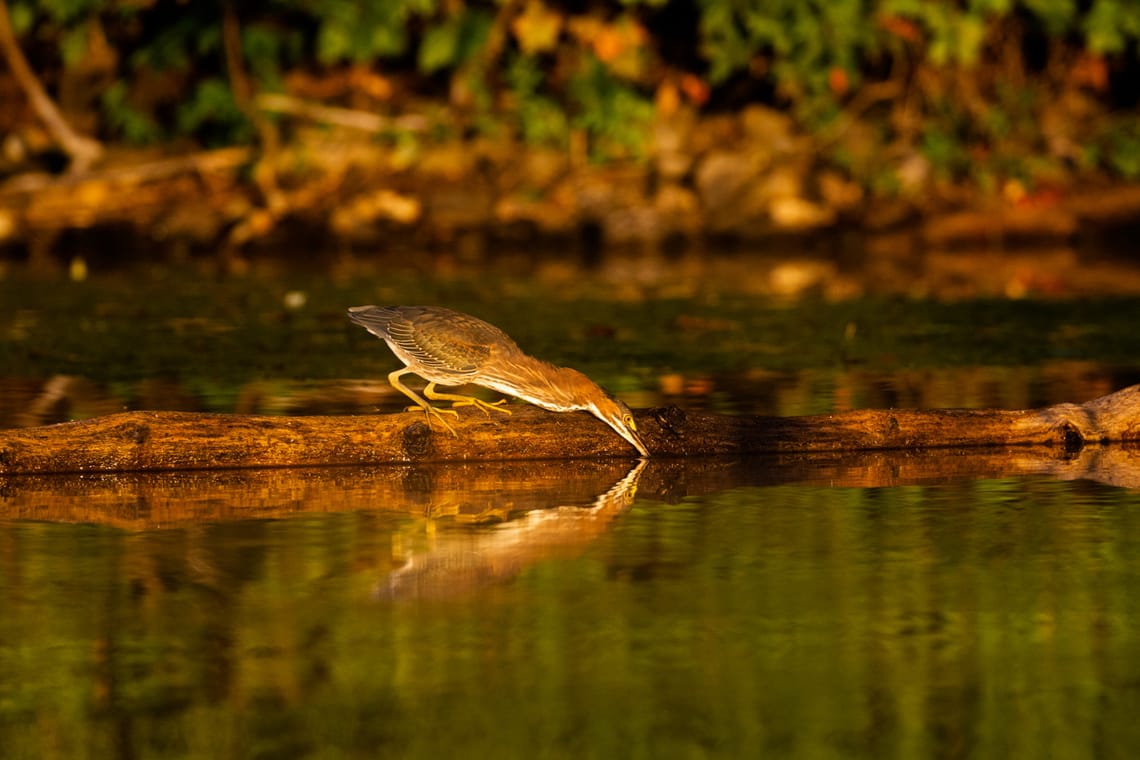
Along the quiet edges of ponds and streams, where fallen logs create natural bridges over dark water, one of North America's most intelligent birds waits in perfect stillness. The Green Heron isn't just hunting - it's executing a strategy that would impress any angler.
The Art of the Ambush
While their larger cousin, the Great Blue Heron, commands attention with its impressive size, Green Herons have perfected the art of being overlooked. Roughly crow-sized and impossibly still, they can hold a hunting position for thirty minutes or more without so much as a feather twitch.
This isn't passive waiting. Green Herons position themselves with scientific precision - always in shadow when possible, neck coiled like a spring, eyes locked on the water's surface. When an unsuspecting minnow or frog ventures too close, the strike happens faster than human eyes can follow. One moment the heron is a statue; the next, it's swallowing its prey.
The Tool User's Advantage
Here's what separates Green Herons from almost every other bird in North America: they use tools.
Scientists have documented Green Herons dropping insects, feathers, twigs, and even bread crumbs onto the water's surface. Then they wait. When curious fish come to investigate the "bait," the heron strikes. This behavior is so remarkable that it places Green Herons among the very few bird species worldwide known to use tools for hunting.
Not every Green Heron uses tools, but those that do often teach the technique to their offspring, passing down what amounts to cultural knowledge through generations.
Finding the Invisible Bird
Despite being fairly common, Green Herons are masters at going unnoticed. Their name itself is misleading - you'll rarely see obvious green on these birds. Instead, they appear blue-gray from a distance, with chestnut-colored necks and dark caps. Only in perfect light can you detect the subtle green sheen on their wings and back.
Look for them on fallen logs, dock posts, or low branches overhanging water. Unlike Great Blue Herons that wade in open shallows, Green Herons prefer cover. They hunt from perches along wooded streams, pond edges with overhanging vegetation, and marshy areas with plenty of hiding spots.
The key to spotting them? Look for the horizontal shape. While most herons stand tall and vertical, hunting Green Herons stretch their bodies parallel to the water, necks extended forward, creating a distinctive profile that looks more like a bittern than a typical heron.
The Golden Hour Hunter
Green Herons are crepuscular, meaning they're most active during twilight hours. As the sun rises or sets, casting long shadows across the water, these patient hunters take their positions. The low-angle light that photographers call the "golden hour" coincides perfectly with peak hunting time.
This is when you might hear their sharp "skeow" call - often your first clue that a Green Heron is nearby. Follow the sound and look for that characteristic hunched shape on a log or branch over water.
Seasonal Secrets
In New England, Green Herons arrive in April and stay through September, making them true summer residents. Unlike some herons that form large rookeries, Green Herons are typically solitary or found in pairs during breeding season. They build small stick nests in trees near water, often reusing the same site year after year.
Come fall, they begin their journey to Central America and the Caribbean, leaving our northern wetlands quieter and a little less magical.
The Patient Observer's Reward
Watching a Green Heron hunt teaches patience. In our world of constant motion and instant gratification, these birds remind us that sometimes the best strategy is to be still, watch carefully, and wait for the perfect moment.
Next time you're near a wooded pond or quiet stream, pause for a moment. Look for that horizontal shape on a log, that impossibly still figure waiting in the shadows. You might just witness one of nature's most patient predators at work - and if you're very lucky, you might see one fishing with tools.
Have you spotted a Green Heron in your area? These remarkable hunters are more common than most people realize - they're just exceptional at staying hidden.