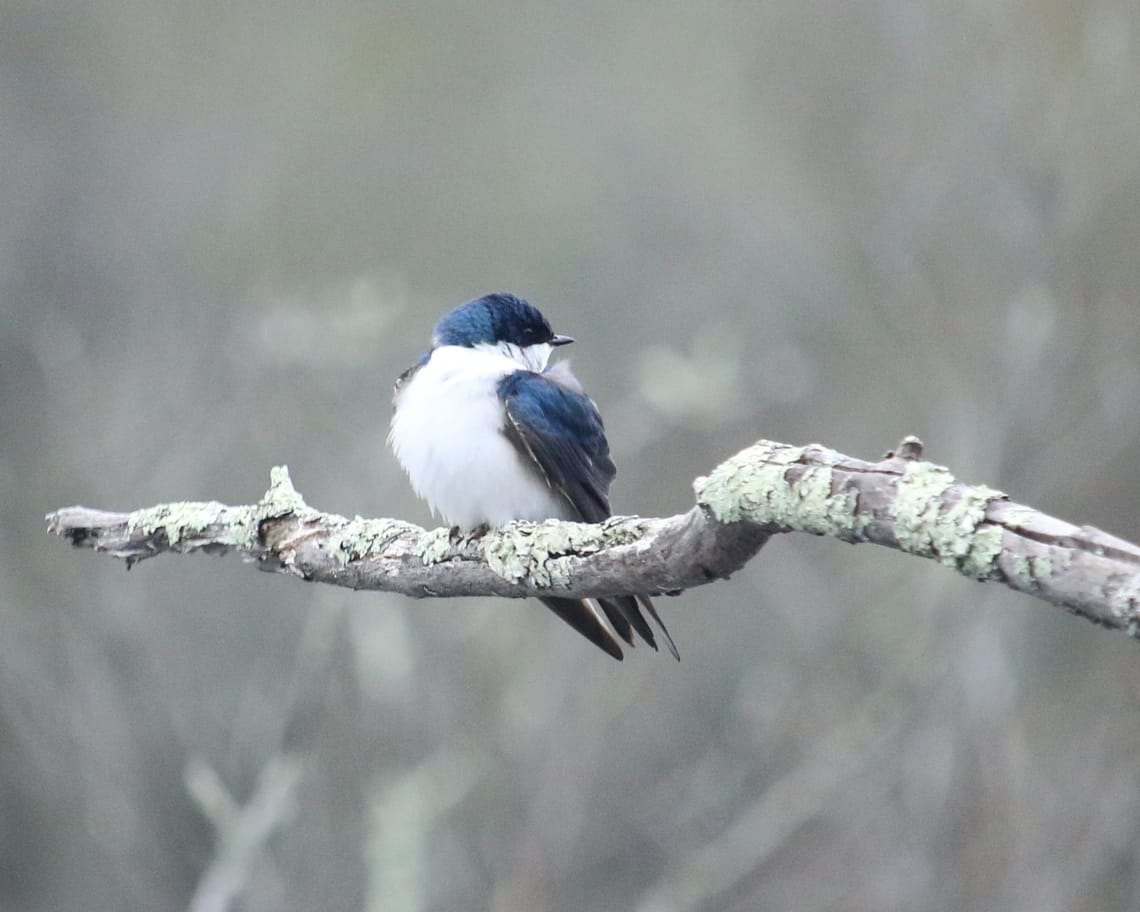
Tree Swallows: The Iridescent Acrobats
That metallic blue-green shimmer isn't a trick of the light. Tree Swallows wear one of nature's most stunning costumes - feathers that shift from deep blue to emerald green depending on the angle, creating an iridescent display that seems almost supernatural against their pure white undersides.
The Aerial Athletes
Tree Swallows spend up to 80% of their waking hours in flight. Unlike many songbirds that perch to hunt, these aerial specialists catch everything on the wing - insects, spiders floating on silk threads, even berries tossed into the air. They drink by skimming water surfaces at full speed, bathe by hitting the water repeatedly in flight, and even collect nesting materials without landing.
Their flight style is distinctive: a mix of rapid flapping and graceful gliding, with sudden twists and turns that would make a fighter pilot envious. They can execute hairpin turns at 25 mph, snatch a mosquito from the air, and immediately change direction to catch another. During peak breeding season, a single Tree Swallow can consume anywhere from 600 to 2,000 insects per day, depending on the size of their prey.
The Temperature Game
That fluffed-up appearance in the photograph? It's not just about looking cute. Tree Swallows are masters of thermoregulation. On cold mornings, they puff their feathers to trap insulating air, sometimes appearing twice their normal size. They'll also cluster together in groups, sometimes hundreds strong, sharing body heat in what researchers call "communal thermoregulation."
But here's what's remarkable: In extreme conditions when insects aren't flying and food is scarce, Tree Swallows can lower their body temperature by up to 10 degrees Celsius, entering a state called torpor. This emergency energy-saving mode is rare among songbirds and only used when survival is at stake.
The Feather Obsession
Tree Swallows have an unusual fixation: they're obsessed with white feathers. While most birds line their nests with whatever soft material is available, Tree Swallows specifically seek out white feathers, particularly from gulls, and will travel considerable distances to find them.
Researchers have discovered this isn't just preference - it's strategy. Nests with more feathers (some contain 50 to over 100, varying by region) maintain more stable temperatures, and the chicks in these nests grow faster and survive better. During nest building, Tree Swallows will actually fight over feathers, engaging in spectacular aerial chases where one bird tries to steal a feather from another mid-flight.
The Berry Exception
Most aerial insectivores face a harsh reality: when insects disappear, they must migrate or perish. Tree Swallows found a third option. They're the only North American swallows that switch to eating fruit when insects become scarce, particularly bayberries (wax myrtle berries) during fall migration and winter.
This dietary flexibility allows them to migrate later than other swallows and survive in areas where purely insectivorous birds would starve. The high-fat content of bayberries - up to 50% fat by dry weight - provides the energy needed for long migration flights. Some Tree Swallows even overwinter along the Atlantic coast, subsisting almost entirely on these berries.
The Nest Box Champions
Tree Swallows have become the poster children for nest box conservation programs. They readily accept artificial nest boxes, making them perfect for citizen science projects and allowing researchers unprecedented access to their breeding biology.
This adaptability has revealed fascinating behaviors. In rare cases (about 5-10% of nests), Tree Swallows engage in cooperative breeding - a female might have help raising her young from other birds, usually failed breeders or juveniles who haven't secured their own nest sites. These helpers gain valuable experience that improves their own future breeding success.
The Dawn Gathering
One of nature's most spectacular sights occurs during Tree Swallow migration: the dawn gathering. Thousands, sometimes hundreds of thousands, of Tree Swallows roost together in reed beds during migration. As the sun rises, they burst into the air in loose, flowing aggregations, creating rivers of birds across the sky.
These gatherings serve multiple purposes beyond just safety in numbers. Young birds learn migration routes from experienced adults, and the massive groups can more efficiently locate food sources. The social information exchange that happens at these roosts is crucial for survival.
The Color-Changing Mystery
Not all Tree Swallows are created equal - at least not in color. While adult males sport that brilliant iridescent blue-green, females are often duller, and young birds are completely brown their first year. But here's the strange part: some females develop male-like iridescent plumage, while others remain dull their entire lives.
This variation isn't random. Researchers have found that brighter females tend to be more aggressive, secure better territories, and may have higher breeding success. The brown yearling females can actually breed (unusual for songbirds), and their dull plumage helps them avoid aggression from older females - a camouflage strategy that lets them slip under the radar.
Living on the Edge
Tree Swallows are climate refugees in real-time. Their breeding range has shifted northward by nearly 50 miles over the past 50 years as temperatures warm. They're arriving at breeding grounds earlier - about 12 days earlier than they did in the 1960s. These shifts make them valuable indicators of environmental change.
Yet they're remarkably resilient. Tree Swallows can breed from sea level to 10,000 feet elevation, from Alaska to Central America. They've learned to nest in everything from woodpecker holes to traffic cones. However, climate change brings both opportunities and risks - while longer breeding seasons might mean more broods, mismatched timing between insect hatches and chick-rearing periods can spell disaster.
The Specialized Intelligence
Recent research has revealed Tree Swallows excel at specific cognitive tasks. They have exceptional spatial memory - recognizing individual neighbors by their calls, remembering the location of productive feeding areas, and adjusting their migration timing based on weather patterns hundreds of miles away. While they're not problem-solvers like corvids, their intelligence is perfectly tuned to their aerial lifestyle.
Females assess potential nest sites like house hunters, checking multiple cavities before choosing. They remember which sites were successful in previous years and compete fiercely for proven locations. Males perform elaborate aerial courtship displays that aren't just about showing off flying skills - they're demonstrating their ability to defend a territory and provide for offspring.
Tree Swallows remind us that some of nature's most successful species aren't the biggest or strongest, but those that adapt, cooperate, and find opportunity where others see limitation. Next time you see that iridescent flash over a meadow or pond, you're witnessing one of North America's most remarkable survivors.